Meet the Teachers

500738321 24110837865167356 3641030162379208565 n

Steven Thull

Steven started dancing in the summer of 2015. Having no prior dance background, a friend invited him to check it out, and he was hooked. Soon he was regularly attending weekly classes with Barbara Warren & Alden Stevens, as well as weekly RIT and UofR Tango Club meetings. 
Only a few years later, when his teachers were leaving NY, Steven was asked to carry on the Tango traditions in Rochester.

As Steven accepted this new responsibility, it fueled his passion and dedication to travel as much as possible, learn as much as possible, and dance as much as possible. Taking opportunities to learn from some of the most respected teachers and dancers in the world, Steven brings this knowledge and experience back home to Rochester. Not only does he share the wisdom of great teachers, he also shares his lessons and experiences as a popular social dancer. Of course, like any trustworthy teacher, his role as student will never stop.

Having past work experience in education, Steven creates a learning environment that is fun, friendly, and welcoming. Knowing that everyone learns differently, he’s thrilled to help each student reach their “ah-ha!” moment, and improve at every lesson.

While Steven is respected for his dancing, he has also gained recognition as a popular Tango photographer and Tango DJ.

981e2d75 a0b5 49b6 b336 2999efb4d5c8

Katie Larson

I grew up in Binghamton, NY, and have been dancing since the age of 3. I attended RIT for Industrial Design, where I joined RIT Tango Club in 2016. Having grown up with tap, jazz, lyrical, and hip-hop there was quite an adjustment switching to a partner dance! Despite some initial struggles I instantly fell in love.  I had to move back home after college, but returned to Rochester in 2021 and began helping Steven with weekly classes towards the end of 2022. By day I work in the tradeshow world, by night I’m a small business owner, a cello player, and a dancer. I look forward to helping people find a love for Argentine Tango, so stop in to class and say hello!

What is Argentine Tango?

A dance of Passion…

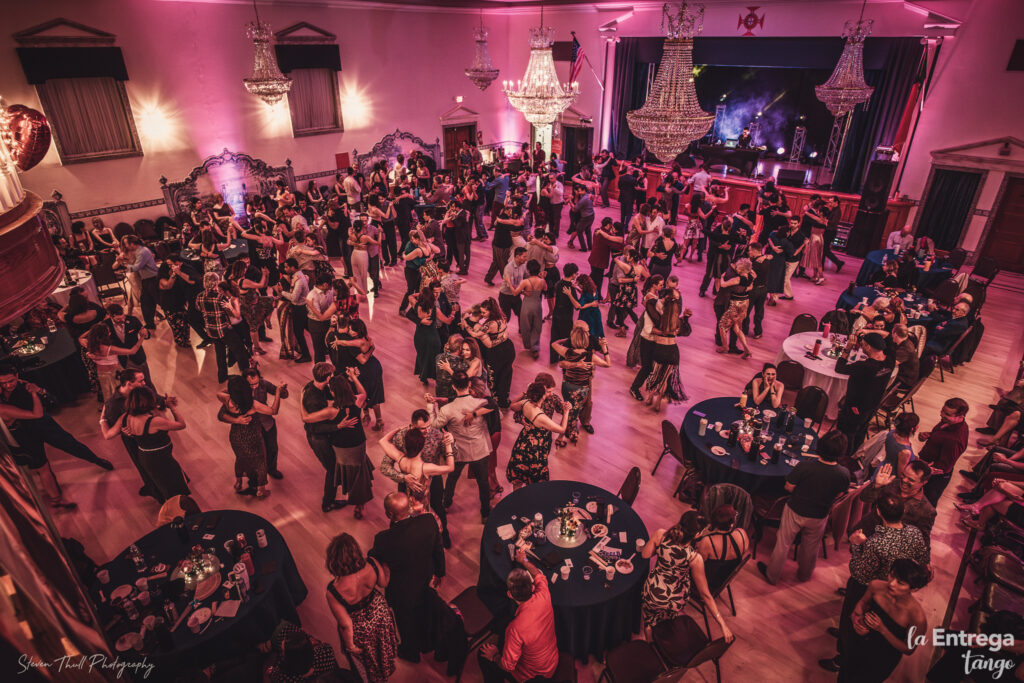
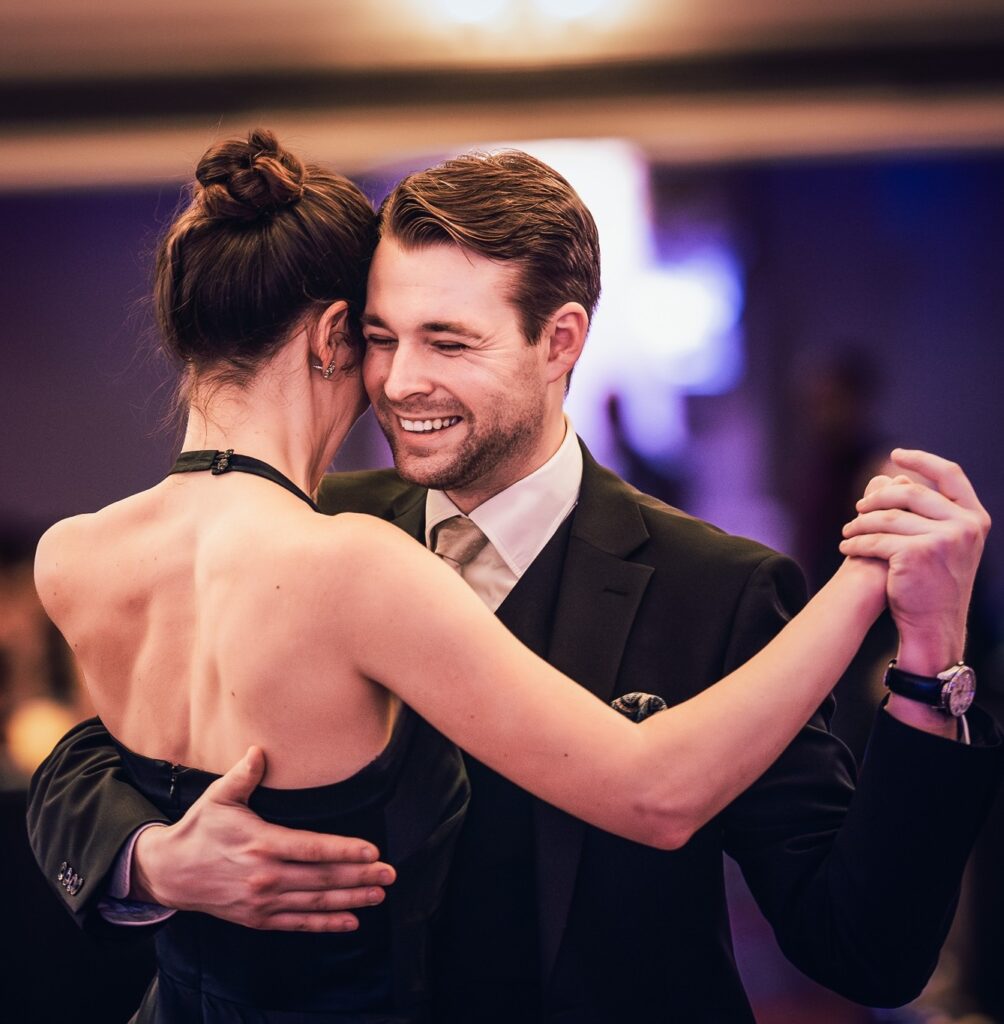
Argentine Tango is a social partner dance that focuses on two main principles – connection and improvisation. Learning how to move to music is simple, but to connect with another human in an embrace, and create ideas and movements together with the music – that takes time to learn. With traditionally a Leader and a Follower, you form a relationship through connection that requires attentiveness and confidence. Danced at a Milonga, Tango moves travels around a dancefloor with other dancers, much like cars on the road. The códigos, or social codes, create a sense of culture, safety, and mutual respect at a Milonga.

574854008 25460617323522730 8086528184053518399 n
browserpreview tmp

A fusion of culture…

In the late 19th Century, Argentina was seeing big changes. 
Experiencing massive industrial growth, Argentina invited Europeans to immigrate to their country, with promise of work and wealth. With over 6 million Europeans arriving, mostly men from Italy, Spain, Germany, and France, most came to an empty promise of success, and found a new home in the barrios of Buenos Aires. Along with their music, instruments, dances, and traditions from home, there was a sense of loneliness, longing, and memories.

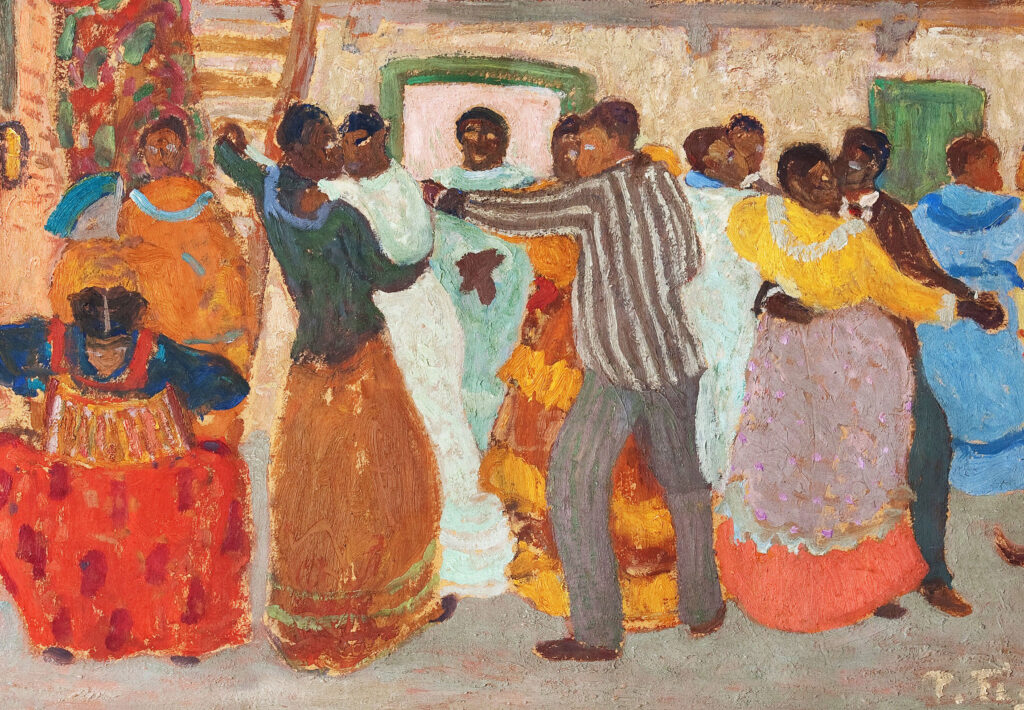
Of course, before the Europeans arrived, there were the African-Argentines that had  been brought to Argentina through the Portuguese slave trade and through Brazil, centuries before. Similar to Jazz music in the US, music and unique polyrhythms were a part of the African traditions that were shared through generations. In the 19th Century, in Uruguay and Argentina, a popular dance called “Candombe” kept the culture and music alive. Together with the spanish “habanera” rhythm that had been sweeping across South America, many of the elements of tango music and dance had it’s place here.

Next there are the Gauchos, the famed cowboys of Argentina. Rooted in the Pampas of Argentina, their music, poetry, and folk dance provided further elements of Tango, long before the Europeans arrived.

When the Europeans came and filled the streets of Buenos Aires, all of these elements started to come together. Young men watching the Candombe, singing songs from the Gauchos, and fusing it together with Europoean instruments and melodies, Tango slowly became the ultimate World Music.

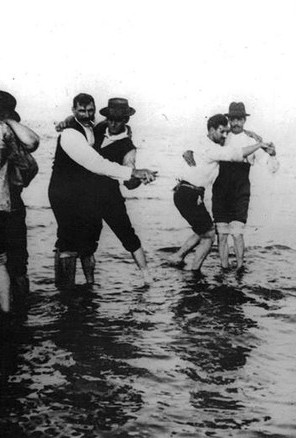
Musicians created new compositions and played on the streets. Men learning to dance amongst groups of other men, before having the privilege to dance with a woman. Before tango was ever conceived as “elegant,” it was a street dance. Eventually Tango found it’s way to Paris, and from there it grew to a global phenomenon, finding it’s “Golden Age” between 1935-1950s. Now, over 100 years later, Argentine Tango continues to  grow, evolve, and spread, making it one of the most popular dances in the world.

new 1904 men dancing together en el rio